
Why Is My Baby Breathing Fast While Sleeping? What’s Normal and When to Worry
- Created:
14. 4. 2026 - Updated:
13. 4. 2026 -


You’re standing by the crib, watching your baby sleep.
Everything is quiet… except their breathing.
It’s faster than you expected. Tiny chest rising and falling, again and again. And suddenly, instead of feeling calm, you feel a little knot of worry.
Is this normal?
If you’ve ever caught yourself counting your baby’s breaths in the middle of the night—you’re not alone. Most parents do this at some point. And the good news is: in most cases, fast breathing during sleep is completely normal.
Let’s go through it together.
What Is Normal Breathing for a Sleeping Baby?
Babies don’t follow the same breathing patterns as adults. In fact, their breathing can seem surprisingly fast—and even irregular.
Here’s what’s considered normal:
1. Normal Heart Rate
Newborns tend to have faster heartbeats than older babies and adults. As they grow, their heart rate gradually slows down.
- 0–1 month (awake): 100–160 beats per minute
- 1–12 months (asleep): 80–160 beats per minute
2. Normal Breathing Rate
A baby’s breathing rate can fluctuate slightly, especially during sleep, feeding, or crying. While occasional changes are normal, consistently high or labored breathing could indicate a problem. To track these patterns, many parents use a baby breathing monitor. These devices track patterns and detect any concerning changes early.
- 0–1 month: 40–60 breaths per minute
- 1–12 months: 20–40 breaths per minute
And here’s something many parents don’t expect: their breathing isn’t always steady.
You might notice:
- A few quick breaths
- A short pause
- Then breathing picks up again
This is called periodic breathing, and it’s a natural part of how a baby’s body develops in the early months.
Why Is My Baby Breathing Fast While Sleeping?
There are a few very common reasons behind faster breathing—and most of them are completely harmless.
1. Active (REM) Sleep
Babies spend a lot of time in active sleep.
During this phase, you may notice:
- Faster, uneven breathing
- Little movements or twitches
- Fluttering eyelids
It can look intense, but it’s actually a sign your baby’s brain is developing just as it should.
2. An Immature Breathing System
In the early weeks, your baby is still learning how to regulate their breathing.
That can lead to:
- Irregular rhythms
- Short pauses
- Faster breathing cycles
It may look unusual, but it’s simply part of growing up.
3. Growth and Development
Babies grow incredibly fast—especially in the first months.
Even as they sleep, their bodies are working hard. Sometimes that means breathing a little faster than usual.
4. Mild Congestion or Environment
Even a slightly stuffy nose can change how your baby breathes.
Things like:
- Dry air
- A mild cold
- Room temperature
can all make breathing seem quicker or more noticeable.

Sign up to our newsletter
get weekly access to our best deals, tips and tricks.
When Fast Breathing Is NOT Normal
Most of the time, there’s nothing to worry about—but there are a few signs you shouldn’t ignore.
Watch for:
- Breathing consistently faster than 60 breaths per minute at rest
- Skin pulling in around the ribs or neck (retractions)
- Flaring nostrils
- Grunting sounds
- A bluish tint around lips or face
If you notice any of these, it’s best to contact your doctor right away.
When to Call Your Doctor
You know your baby best.
If something feels wrong—even if you can’t quite explain why—it’s always okay to check with a pediatrician.
Definitely reach out if:
- Fast breathing doesn’t settle after a few minutes
- Your baby seems uncomfortable or distressed
- You notice any of the warning signs above
It’s always better to feel reassured than to keep worrying.
How to Check Your Baby’s Breathing at Home
If you ever find yourself leaning over the crib just to double-check—you’re not alone. You can check your baby’s breathing in a simple way:
- Watch their chest rise and fall
- Count breaths for 30 seconds
- Multiply by two
But here’s the truth most parents discover quickly: you can’t (and shouldn’t) stay up all night watching your baby breathe
That’s where the right kind of baby monitor can help—not by replacing you, but by giving you a little more peace of mind when you step away.
Using a Baby Monitor That Alerts You to Abnormal Breathing
Some modern monitors don’t just show video or sound—they track breathing patterns and alert you if something changes.
For example, devices like the
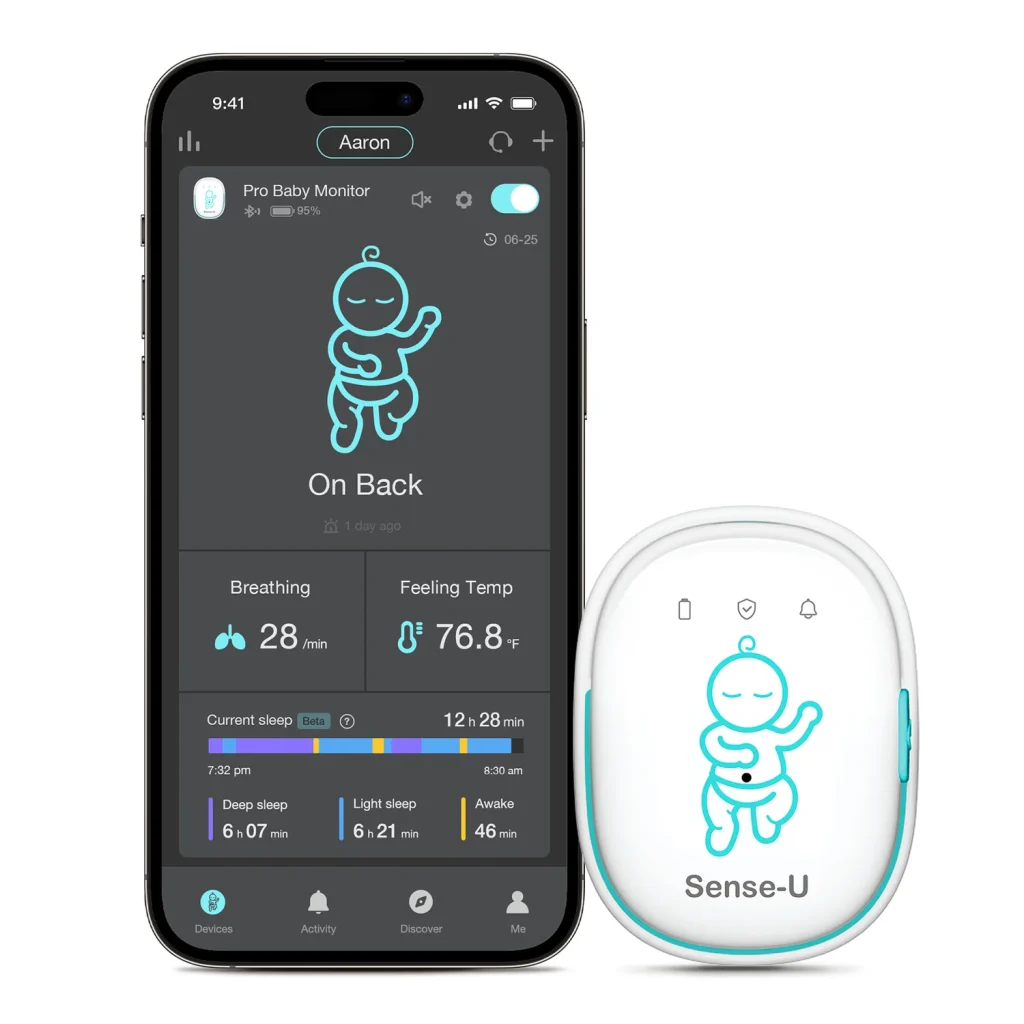
work by detecting your baby’s abdominal movement. If no movement is detected for a short period, the device first tries to gently stimulate your baby—and if that doesn’t work, it sends an alert to your phone.
If you prefer something without wearables, a sensor pad like the
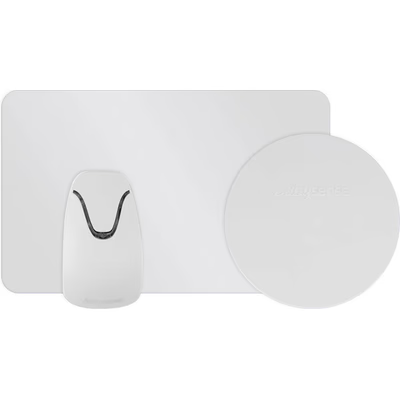
sits under the mattress and monitors movement from below. If the breathing becomes irregular or pauses, it triggers an alarm.
There are also simpler clip-on options like

which attach directly to the diaper and give you immediate feedback with lights and sound alerts.
💡Why do pediatricians not recommend the Owlet Smart Sock
What These Monitors Actually Do (and Don’t Do)
Breathing monitors can:
- Alert you if breathing slows, stops, or becomes irregular
- Notify you through sound, vibration, or your phone
- Help you feel more confident stepping out of the room
But it’s important to know:
- They are not medical devices in most cases
- They don’t prevent conditions like SIDS
- False alarms can happen (especially with normal breathing pauses)
Think of them as an extra layer of awareness—not a replacement for safe sleep and regular check-ins.
How to Help Your Baby Breathe More Comfortably
A few small things can make a big difference:
- Keep the air slightly humid
- Use saline drops if your baby has a stuffy nose
- Always place your baby on their back to sleep
- Keep the sleep space clear and safe
Simple adjustments often bring a lot of comfort.
A Gentle Reassurance for You
Watching your baby breathe is one of those things no one really prepares you for.
You lean in. You check again. Sometimes, you even hold your own breath for a second—just to make sure everything is okay.
And that’s completely natural.
In most cases, fast breathing while sleeping is just part of how babies grow and develop. Their bodies are learning rhythm, balance, and regulation—one breath at a time.
You don’t have to watch all night.
You just need to know what’s normal—and trust yourself when something isn’t.
FAQ: Why Is My Baby Breathing Fast While Sleeping?
Stay calm and check their breathing rate while they’re at rest—if it’s under 60 breaths per minute and there are no other symptoms, it’s usually normal; if you’re unsure, contact your pediatrician.
Signs like chest retractions, flaring nostrils, grunting, or a bluish color around the lips are red flags and need immediate medical attention.
Look for labored breathing—fast rate, visible effort (chest sinking in), unusual sounds, or your baby seeming restless or lethargic.
Poor feeding, fever or low temperature, difficulty breathing, lethargy, convulsions, persistent vomiting, and bluish or pale skin are key warning signs that require urgent care.


