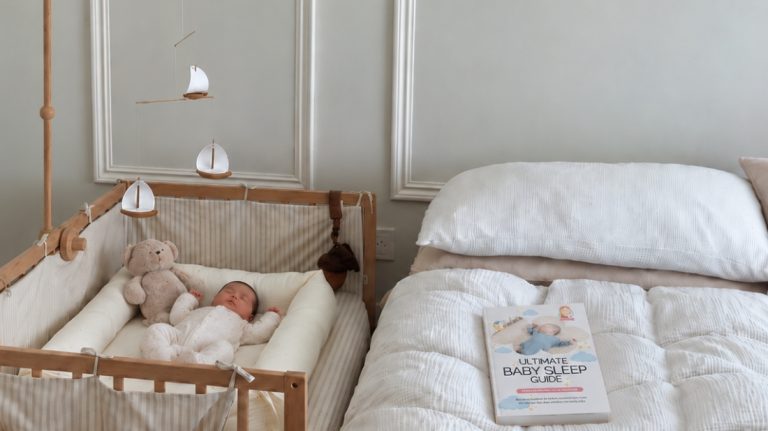
The Ultimate Guide to Baby Sleep: Schedules, Routines & Better Nights
- Created:
15. 9. 2026 - Updated:
7. 9. 2026 -


It’s 2:47 a.m. Your baby is awake. Again.
You’ve fed them. Changed them. Rocked them. Put them down. Picked them back up. And somewhere between another yawn and another Google search, you start wondering:
Is my baby supposed to sleep like this?
Here’s the reassuring answer: baby sleep can be messy, unpredictable, and completely different from one week to the next.
Newborns don’t arrive knowing that nighttime is for sleeping. Their sleep patterns develop gradually, and throughout the first year, growth spurts, feeding, teething, new skills, separation anxiety, and changing nap needs can all turn a perfectly good sleep routine upside down.
So instead of chasing the “perfect” baby sleep schedule, let’s focus on something much more useful: understanding how baby sleep actually works and what you can do to support better, safer sleep.
And because we know you probably won’t want to search for all of this again at 3 a.m.:

You can also explore all our latest advice in the Annie Baby Monitor Baby Sleep hub.
Baby Sleep Is Different From Adult Sleep
If your newborn sleeps all afternoon peacefully and then decides 1 a.m. is the perfect time to socialize, there’s a reason.
Newborn sleep simply doesn’t work like adult sleep.
According to the American Academy of Pediatrics, newborns do not have regular sleep cycles yet. Their sleep may come in short stretches throughout both the day and night, while more organized sleep patterns begin developing over the first few months.
That means frequent waking during the newborn stage is expected.
Your baby may wake because they are:
- hungry
- uncomfortable
- too warm or cold
- overstimulated
- going through a growth spurt
- simply moving between sleep cycles
As babies grow, their internal body clock matures. Longer periods of nighttime sleep usually begin to appear, daytime naps become more predictable, and bedtime starts to look slightly less chaotic.
Slightly being the important word.
Every baby develops at their own pace.
How Much Sleep Does a Baby Need?
One of the most common questions parents ask is:
Is my baby sleeping enough?
There isn’t one exact number that works for every child.
For babies aged 4–12 months, the American Academy of Sleep Medicine recommends 12–16 hours of sleep within 24 hours, including naps. Children aged 1–2 years generally need 11–14 hours, including naps.
Newborn sleep is less predictable. Newborns often sleep for much of the day, but that sleep tends to happen in multiple short stretches rather than one long nighttime block.
Baby Sleep at a Glance
| Age | What Sleep Often Looks Like |
|---|---|
| Newborn | Sleep spread throughout day and night with frequent waking |
| 1–3 months | Day/night rhythm slowly begins developing |
| 4–6 months | Sleep often becomes more organized and naps more predictable |
| 6–9 months | Longer wake periods and fewer naps |
| 9–12 months | More established nighttime sleep and usually fewer daytime naps |
| 12+ months | Sleep continues consolidating and nap needs gradually decrease |
Remember: sleep charts are guides, not deadlines.
One baby may happily take long naps. Another may specialize in 32-minute power naps and still be perfectly healthy.
Instead of comparing your baby with another child, pay attention to their overall pattern, mood, feeding, development, and signs of tiredness.
🔗 For a more detailed age-by-age breakdown, read our Newborn to Toddler Baby Sleep Chart or our Baby Sleep Schedule for 0–12 Months.
Baby Sleep Schedule by Age
Baby sleep changes quickly during the first year.
And just when you think you’ve figured it out?
Your baby grows.
Here’s what you can generally expect.
Newborn Sleep: 0–3 Months
Forget strict schedules for now.
Newborn sleep revolves largely around feeding and comfort. Your baby may sleep for short stretches around the clock and wake frequently to eat.
Instead of trying to create an exact timetable, focus on simple differences between day and night:
- keep daytime feeds and interactions brighter and more active
- keep nighttime feeds calm and quiet
- dim the lights at night
- avoid unnecessary stimulation during nighttime waking
- begin using simple bedtime cues
At this age, rhythm matters more than schedule.
Baby Sleep: 4–6 Months
Around this stage, sleep often starts becoming more organized.
You may notice:
- longer stretches of nighttime sleep
- more recognizable nap patterns
- longer periods awake between naps
- a more consistent bedtime
This is also a useful time to build a simple bedtime routine if you haven’t already.
But don’t panic if your previously good sleeper suddenly starts waking more often. Sleep patterns mature rapidly around this age, and temporary disruptions are common.
Baby Sleep: 6–9 Months
Your baby is becoming much more interested in the world.
Sitting. Crawling. Babbling. Exploring.
And apparently practicing all of those things at bedtime.
Babies in this age range typically stay awake longer between naps, while daytime sleep gradually consolidates.
Developmental milestones, teething and separation anxiety can also temporarily affect sleep.
Baby Sleep: 9–12 Months
By now, many babies have a recognizable daily rhythm.
That does not necessarily mean uninterrupted nights.
New skills, increased mobility, separation anxiety, illness and teething can still lead to wake-ups.
Consistency helps, but flexibility matters too. Your baby’s sleep needs will continue changing as they approach toddlerhood.
🔗 For a more detailed breakdown, see our complete Baby Sleep Schedule Guide.

Sign up to our newsletter
get weekly access to our best deals, tips and tricks.
What Are Wake Windows?
If you’ve ever tried putting a baby to bed who is absolutely determined to stay awake, you already understand why timing matters.
A wake window is simply the amount of time your baby spends awake between periods of sleep.
Wake windows generally become longer as babies grow.
A newborn might only comfortably stay awake for a relatively short period. An older baby can usually handle much longer stretches of play, feeding and interaction before needing another nap.
But here’s the important part:
Wake windows aren’t stopwatches.
Your baby doesn’t know the internet says they should be asleep in exactly seven minutes.
Use wake windows as a rough guide while also watching your baby.
Common signs of tiredness include:
- yawning
- rubbing eyes
- looking away
- becoming quieter
- fussiness
- losing interest in toys
- becoming unusually clingy
Waiting too long can sometimes leave a baby overtired and harder to settle. Trying too early may leave you staring at a very awake baby who has absolutely no intention of sleeping.
The sweet spot usually comes from combining approximate timing with your baby’s own cues.
🔗 Want to dive deeper? Read our Wake Windows by Age Guide.
How to Build a Baby Sleep Routine That Actually Works
You don’t need an elaborate 14-step bedtime ritual.
Babies love repetition, not production value.
A good bedtime routine is simply a predictable sequence of calm activities that tells your baby:
The day is slowing down. Sleep is coming next.
Your routine might look like this:
- Feed
- Bath or wash
- Fresh diaper and pajamas
- Dim the lights
- Read a short book
- Sing a lullaby
- Cuddle
- Bed
Twenty minutes may be enough.
The exact activities matter less than doing roughly the same things in roughly the same order.
Over time, those little cues—pajamas, darkness, a familiar song—become associated with sleep.
Keep It Predictable, Not Perfect
Real life happens.
You’ll travel.
Dinner will run late.
Your baby will fall asleep in your arms before you even make it to the story.
One unusual evening will not destroy your baby’s sleep forever.
Aim for consistency without rigidity.
🔗 If bedtime has become a nightly mystery, our full guide explains How to Create a Baby Sleep Routine That Actually Works.
🔗 You can also steal a few ideas from our 10 Baby Bedtime Routine Ideas.
Create a Sleep-Friendly Environment
Babies don’t need a nursery filled with expensive “sleep solutions.”
In fact, simple is often better.
A calm sleep environment may include:
- low light before bedtime
- a darkened room during sleep
- comfortable clothing
- a consistent room environment
- gentle white noise if your family chooses to use it
- minimal stimulation during nighttime waking
The goal is to make bedtime boring—in the best possible way.
Dark. Calm. Familiar. Predictable.
And before buying another product promising twelve uninterrupted hours of sleep, remember that no gadget can guarantee how long your baby sleeps.
🔗 See our guide to Baby Sleep Products That Actually Help Babies and Parents Sleep Better for a practical look at what may actually be useful.
Safe Baby Sleep Comes First
Better sleep is wonderful.
Safer sleep is essential.
For healthy babies up to 1 year old, current American Academy of Pediatrics guidance recommends placing babies on their backs for every nap and nighttime sleep on a firm, flat sleep surface designed for infant sleep. The sleep area should stay free of pillows, loose blankets, stuffed toys, bumper pads and other soft items.
Safe Sleep Checklist
For babies under 1:
- Put baby down on their back for naps and nighttime sleep.
- Use a firm, flat sleep surface.
- Use only a fitted sheet on the mattress.
- Keep loose blankets, pillows, stuffed animals, bumpers and other soft objects out of the sleep space.
- Avoid weighted blankets and weighted sleep products.
- If your baby falls asleep in a car seat, swing, stroller or similar sitting device, move them to an appropriate firm, flat sleep surface as soon as practical.
- Follow current guidance on room sharing and other safe-sleep practices.
If your baby can comfortably roll both from back to tummy and tummy to back, the AAP says you do not have to continuously turn them back over—but you should still place them on their back when you put them down to sleep and keep the sleep area clear.
No product can completely eliminate the risk of SIDS. Safe-sleep recommendations are designed to reduce risk, not provide a guarantee.
And remember: a baby monitor is useful for observing your child, but it does not replace safe-sleep practices or medical care.
If you ever have concerns about your baby’s breathing, health or sleep, contact your pediatrician or healthcare provider.
Why Won’t My Baby Sleep?
Some nights, your baby goes down beautifully.
Other nights?
Apparently sleep has been cancelled.
Before rebuilding the entire schedule, look for the simple explanation first.
Your Baby Is Overtired
It sounds backwards, but being extremely tired doesn’t always make falling asleep easier.
An overtired baby may become fussy, overstimulated and difficult to settle.
Try beginning your routine a little earlier when you notice tired cues.
Your Baby Isn’t Tired Yet
The opposite problem exists too.
As babies grow, their wake windows change. A schedule that worked beautifully last month may suddenly stop working because your baby simply needs more awake time.
Hunger
Babies—especially younger babies—may wake because they need to feed.
Nighttime feeding needs differ according to age, growth and individual circumstances, so discuss questions about reducing or stopping night feeds with your baby’s healthcare professional.
Teething or Illness
Discomfort can temporarily disturb even a well-established sleep routine.
If your baby’s sleep suddenly changes alongside fever, breathing changes, unusual crying, poor feeding, lethargy or anything else that concerns you, contact your healthcare provider rather than assuming it’s “just sleep regression.”
Developmental Milestones
Babies have a habit of practicing exciting new skills at extremely inconvenient hours.
Rolling, sitting, crawling, standing and language development can all coincide with periods of disrupted sleep.
The Routine Changed
Travel, daycare, visitors, daylight changes and family schedule disruptions can all affect sleep.
Often, returning to familiar bedtime cues is enough to help things settle again.
🔗 For more possible reasons—and practical fixes—read Why Your Baby Won’t Sleep.
What Is a Baby Sleep Regression?
You finally have a routine.
Naps are going well.
Bedtime feels almost suspiciously easy.
Then your baby suddenly starts waking again.
Welcome to one of parenthood’s favorite plot twists: sleep regression.
“Sleep regression” is a common term parents use to describe a temporary period when a baby’s established sleep pattern changes. You might notice:
- more nighttime waking
- shorter naps
- difficulty falling asleep
- increased fussiness around bedtime
- earlier waking
These periods can appear alongside developmental changes, changing sleep patterns, separation anxiety, teething, illness or major routine disruptions.
What Should You Do During a Sleep Regression?
Start with the basics:
- keep familiar bedtime cues
- maintain a reasonably consistent routine
- watch your baby’s tired signs
- adjust naps if their sleep needs are changing
- offer comfort when needed
- check for illness or discomfort
- avoid assuming every difficult night requires a completely new sleep strategy
Most importantly, remember that development isn’t linear.
A few difficult nights don’t mean you’ve done something wrong.
🔗 For a deeper look at the common causes, signs and age-related changes, read our Complete Guide to Baby Sleep Regression.
When Do Babies Start Sleeping Through the Night?
Possibly the most Googled question at 3 a.m.:
When will my baby finally sleep through the night?
There is no single age when every baby suddenly sleeps from bedtime until morning.
First, “sleeping through the night” doesn’t always mean twelve uninterrupted hours. Different sources and parents use the phrase differently, and brief waking between sleep cycles can happen even when a child appears to be a great sleeper.
Some babies begin sleeping longer stretches relatively early.
Others take considerably longer.
Both can happen.
Age, feeding needs, development, temperament, routines and individual sleep patterns all play a role.
And even after your baby starts sleeping longer stretches, illness, travel, teething or developmental changes can temporarily bring nighttime wake-ups back.
🔗 Want the full answer? Read When Do Babies Start Sleeping Through the Night?
Do You Need to Sleep Train Your Baby?
No single sleep-training approach is right for every family.
Sleep training generally refers to methods designed to help babies learn to fall asleep—and return to sleep—with less parental assistance.
There are many approaches, ranging from gradual methods with frequent parental reassurance to methods involving longer periods before responding.
But sleep training is not the same thing as night weaning, and reducing nighttime feeds should be considered separately based on your baby’s age, growth and medical needs.
You also don’t need to sleep train simply because another parent did.
Some families find it helpful.
Some prefer more responsive approaches.
Some babies gradually develop independent sleep habits without a formal method.
If you’re considering sleep training, especially if your baby was premature or has feeding, growth, developmental or medical concerns, talk with your pediatrician first.
🔗 Curious about the different options?
See our guide to Sleep Training Your Baby: Methods, Tips and When to Try It.
How Annie Baby Monitor Can Help You Understand Your Baby’s Sleep
When you’ve been awake four times in one night, memory isn’t exactly operating at peak performance.
Was that wake-up at midnight?
Or 2 a.m.?
How long did that nap actually last?
Was yesterday better?
This is where tracking can make sleep feel less random.
Annie Baby Monitor lets you monitor your baby from another compatible device and includes sleep-history features that can help you review sleeping and awake periods, crying or movement events and overall sleep patterns over time.
Instead of relying entirely on your sleep-deprived memory, you can look back and spot patterns.
For example:
- Is the last nap getting too close to bedtime?
- Has total daytime sleep changed?
- Is your baby regularly waking at a similar time?
- Did sleep change when you moved bedtime?
- Is a new pattern emerging?
Annie Baby Monitor also includes features such as live video and audio, sound and motion alerts, two-way communication, lullabies and white noise.
That doesn’t mean an app can make a baby sleep on command.
If only.
But understanding your baby’s actual patterns can make it easier to build a routine around your baby, rather than around somebody else’s perfect schedule on social media.
Download the Ultimate Baby Sleep Guide
You don’t need to memorize everything you’ve just read.
Especially not while running on four hours of broken sleep.
Keep the most important baby sleep information within reach instead.
Our Ultimate Baby Sleep Guide gives you a handy resource you can come back to when you’re working out schedules, naps, routines and those mysterious nighttime wake-ups.
🌙 Save it to your phone now:
And whenever you need a deeper answer, explore all our Baby Sleep articles.
Baby Sleep FAQ
This term means spacing nighttime feeds: the first feed at least 5 hours after bedtime, then subsequent feeds at least 3 hours apart. It’s not an official pediatric sleep recommendation and shouldn’t override a baby’s feeding needs.
Newborn sleep varies widely and often totals about 16–17 hours a day; from 4–12 months, 12–16 hours including naps is recommended, and from 1–2 years, 11–14 hours.
There’s no universally “hardest” month, but many parents find weeks 4–8 especially challenging because crying and fussiness commonly peak around 6 weeks while sleep is still fragmented.
It can be normal if your baby is healthy, feeding well, producing enough wet diapers, and gaining weight appropriately; otherwise, ask your pediatrician whether you should wake them for feeds.
Better Baby Sleep Isn’t About Perfection
There is no magic baby sleep schedule.
There is no routine guaranteed to produce twelve peaceful hours.
And there is definitely no baby who read the same sleep manual you did.
What does help is understanding your baby’s changing needs, following safe-sleep recommendations, building predictable routines and staying flexible enough to adjust as your baby grows.
Some nights will go beautifully.
Some won’t.
Both are part of babyhood.
Watch the patterns instead of one bad night. Follow your baby’s cues instead of comparing them with someone else’s schedule. And when something changes—as it inevitably will—you’ll know where to start.
One last thing before your next nap disappears:
🌙 Download the FREE Ultimate Baby Sleep Guide and keep it close for later
Sweet dreams.
Or at least… longer ones.


