
How to Tell If Your Baby Is Too Hot: Signs of Overheating and What to Do
- Created:
21. 7. 2026 - Updated:
20. 7. 2026 -


You touch your baby’s hands, and they feel cool. Then you notice that the back of their neck is damp.
Are they comfortable—or are they starting to overheat?
Warm weather, naps in a stuffy room, extra clothing, and thick bedding can all leave parents wondering how to tell if their baby is too hot. Because babies cannot tell us that they are uncomfortable, spotting the early signs matters.
Fortunately, you do not have to guess.
How Can You Tell If Your Baby Is Too Hot?
The quickest way to check whether your baby is too hot is to feel their chest or the back of their neck. Your baby should feel comfortably warm and dry—not hot, sweaty, or clammy.
Do not rely on their hands or feet. These often feel cooler than the rest of a baby’s body, even when their core temperature is comfortable.
If your baby’s chest or neck feels hot or damp:
- Remove one layer of clothing or bedding.
- Move them to a cooler, well-ventilated place.
- Check them again after they have had time to cool down.
- Watch for changes in breathing, feeding, alertness, and behavior.
A warm baby is not necessarily an overheated baby. The overall picture matters: how their skin feels, how they are behaving, and whether they improve after you cool their surroundings.
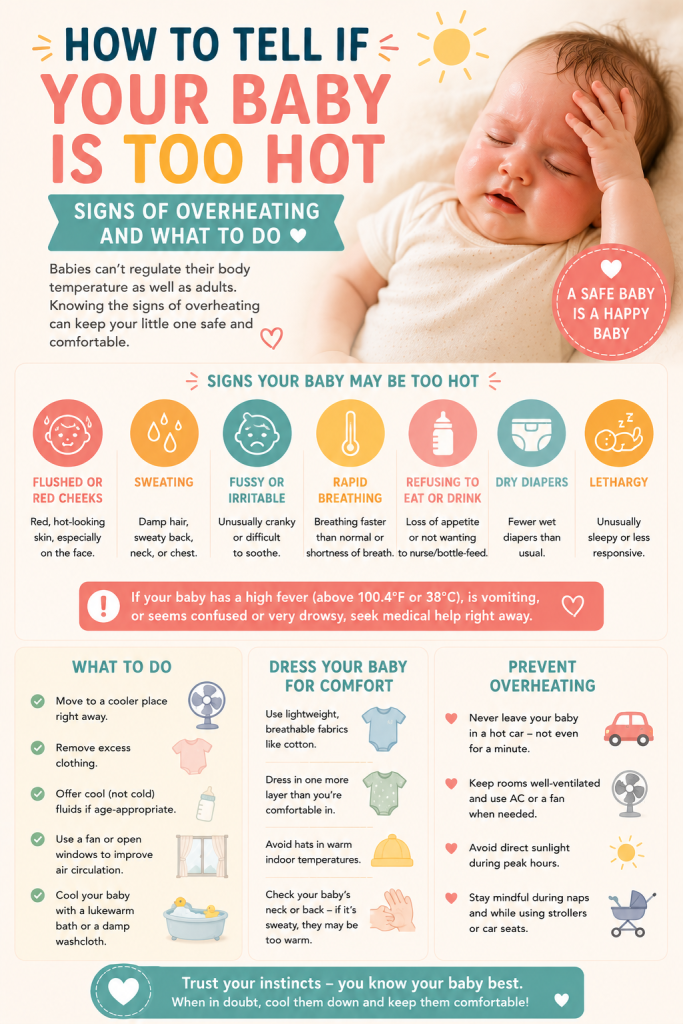
8 Signs Your Baby May Be Overheating
Some signs of overheating are subtle at first. Others require immediate medical attention.
1. Their chest or neck feels hot
Your baby’s chest, tummy, or the back of their neck gives you a better indication of their body temperature than their hands and feet.
Warm and dry skin is generally reassuring. Skin that feels noticeably hot suggests that your baby may be wearing too many layers or spending time in an environment that is too warm.
2. Their skin feels sweaty or clammy
Babies should not feel sweaty while resting or sleeping.
Look for:
- Damp hair
- Moist skin around the neck
- A sweaty back or chest
- Damp clothing
- Clammy skin under a sleep bag
If you notice any of these signs, remove a layer and adjust the room temperature when possible. The Lullaby Trust specifically recommends checking the chest or back of the neck and removing clothing or bedding when the skin feels sweaty or clammy.
3. Their skin looks flushed
A baby who is too warm may appear red or flushed, particularly around the face and cheeks.
However, redness can look different across skin tones and should not be your only guide. Pay attention to how the skin feels and whether your baby is sweating, breathing normally, feeding normally, and behaving like themselves.
4. They are unusually fussy or restless
A hot baby may struggle to settle, cry more than usual, wake frequently, or seem generally uncomfortable.
Of course, fussiness can have many causes—from hunger to teething—so consider it alongside other signs. A damp neck, warm chest, flushed skin, and unusual restlessness together make overheating more likely.
5. They are breathing faster than usual
Pay attention to breathing that seems noticeably quicker, more labored, or different from your baby’s normal pattern.
Move your baby to a cooler environment and seek medical help if their breathing does not quickly return to normal or if they appear to be struggling to breathe.
6. They are unusually sleepy or difficult to wake
Normal baby sleep can be deep, but you know how your baby usually responds.
Unusual drowsiness, weakness, reduced responsiveness, or difficulty waking can indicate a more serious problem. Do not assume your baby is simply tired because it is hot outside.
Seek urgent medical advice when your baby is not responding normally.
7. They are feeding less or showing signs of dehydration
Hot weather can affect feeding patterns. Your baby may also become dehydrated if they are losing fluids and not replacing them.
Possible warning signs include:
- Fewer wet diapers than usual
- A dry mouth or lips
- Few or no tears when crying
- Unusual tiredness
- A sunken soft spot on the head
- Refusing feeds
Continue offering breast milk or formula. Small, frequent feeds may be easier for an uncomfortable baby. Because guidance about additional water differs according to your baby’s age, feeding method, and location, consult your pediatrician before giving water to a baby under six months.
8. They are vomiting, weak, or unresponsive
Vomiting, weakness, fainting, seizures, confusion, or reduced responsiveness may indicate a heat-related illness rather than simple discomfort.
These symptoms need urgent medical attention. The CDC advises seeking medical care immediately when an infant or child shows symptoms of heat-related illness.
Quick Baby Overheating Checklist
| What to check | Comfortably warm | Possibly too hot |
|---|---|---|
| Chest or neck | Warm and dry | Hot, sweaty, or clammy |
| Breathing | Calm and regular | Faster or more difficult |
| Behavior | Alert or sleeping normally | Very fussy, weak, or unusually sleepy |
| Feeding | Feeding normally | Refusing feeds or feeding less |
| Diapers | Usual number of wet diapers | Fewer wet diapers |
| Skin | Normal for your baby | Flushed, very warm, or damp |
Trust your instincts. A parent often notices that something is “off” before all the signs are obvious.
Is My Baby Too Hot or Do They Have a Fever?
Overheating and fever are not the same thing.
A baby can become too hot because of:
- Warm weather
- A stuffy room
- Direct sunlight
- Too many clothing layers
- Heavy bedding
- An unsuitable sleeping bag
- A covered stroller
- Time spent in a hot car
A fever is usually connected to illness or infection. You cannot reliably distinguish fever from overheating by touch alone, so use a digital thermometer when your baby feels unusually hot or appears unwell.
A temperature of 38°C or 100.4°F and above is generally considered a fever. A baby younger than three months with a temperature of 38°C or higher needs prompt medical advice.
Do not assume that a high temperature will disappear after removing a layer. Contact a healthcare professional when your baby has a fever, seems unwell, or does not improve after being moved somewhere cooler.
What to Do If Your Baby Feels Too Hot
If your baby is warm but alert, breathing normally, and otherwise behaving like themselves, take these steps.
Move them somewhere cooler
Take your baby out of direct sunlight and into a shaded, ventilated, or air-conditioned space.
When you are outside, use the stroller canopy, parasol, or a clip-on sunshade. Never cover a stroller with a blanket or muslin. Fabric placed over the stroller can restrict airflow and trap heat around your baby.
Remove excess layers
Take off one layer of clothing and remove unnecessary blankets.
Choose lightweight, breathable clothes that fit the actual temperature—not simply the season. A summer evening can be cool, while a sunny room in spring can become surprisingly warm.
Keep their head uncovered indoors
Babies release heat through their heads, so hats are generally unnecessary indoors unless a healthcare professional has given you different instructions.
Remove hats and extra outdoor layers when entering a warm room, car, shop, or public transport.
Offer regular milk feeds
Offer breast milk or formula more frequently, especially when your baby is feeding for shorter periods.
Breastfed babies may want to nurse more often in hot weather. Formula should always be prepared according to the manufacturer’s instructions—never add extra water to dilute it.
Try gentle cooling
A lukewarm bath, cool room, or gentle water mist can help your baby become more comfortable.
Avoid ice, freezing water, or trying to cool your baby too rapidly. The goal is to bring them back to a comfortable temperature while watching their response.
Check them again
Feel the chest or back of the neck after removing layers and moving to a cooler area.
Their skin should become comfortably warm and dry. Seek medical advice when they remain hot, become lethargic, refuse feeds, develop breathing changes, or otherwise seem unwell.
When Is Overheating an Emergency?
Call emergency services or seek urgent medical help when your baby:
- Is difficult to wake
- Is limp, weak, confused, or unresponsive
- Is struggling to breathe
- Has a seizure
- Faints or loses consciousness
- Is vomiting repeatedly
- Has very hot skin and is not cooling down
- Shows significant signs of dehydration
- Is younger than three months with a temperature of 38°C/100.4°F or higher
- Does not improve after being moved somewhere cooler
While waiting for medical help, move your baby out of the heat, remove excess clothing, and follow the instructions provided by the emergency dispatcher or healthcare professional.
How to Prevent Your Baby From Overheating in Summer
Preventing overheating does not require turning your home into a refrigerator. Small adjustments can make your baby much more comfortable.
Dress your baby in light layers
Lightweight layers make it easier to adjust your baby’s clothing as the temperature changes.
Natural, breathable fabrics may feel more comfortable than thick or heavily insulated clothing. Check your baby regularly rather than following a rigid “one more layer than an adult” rule.
Pay attention to the room, not only the weather forecast
Outdoor temperature is only part of the picture.
Sunlight through a window, poor ventilation, humidity, appliances, and upper-floor rooms can all make a nursery warmer than expected. Use a reliable room thermometer and position it away from direct sunlight, windows, heaters, fans, and air-conditioning vents.
Guidance on the ideal nursery temperature varies by country. The Lullaby Trust recommends a room temperature of 16–20°C for safer sleep, while other resources commonly use a slightly warmer comfort range. The most important step is to avoid overheating and check your individual baby rather than focusing on one exact number.
Choose the right sleepwear
Use sleepwear and sleeping bags designed for the room’s current temperature. Check the manufacturer’s TOG guidance, as products can vary.
When the room is hot, your baby may need only a lightweight bodysuit, diaper, or low-TOG sleeping bag. Avoid adding a loose blanket on top of a sleeping bag.
Keep the sleep space simple
Place your baby on their back on a firm, flat sleep surface. Keep pillows, stuffed animals, bumpers, and loose bedding out of the crib.
A clear sleep space also prevents unnecessary materials from surrounding your baby and trapping heat.
Avoid the hottest part of the day
Plan walks and outdoor activities for cooler morning or evening hours where possible.
Keep babies under six months out of direct sunlight and check them frequently. Shade helps, but it does not guarantee that your baby is cool.
Never leave a baby in a parked car
Never leave your baby alone in a parked vehicle—not for a minute, not with a window open, and not while they are sleeping.
A vehicle can become dangerously hot very quickly. Children left in parked cars are at serious risk of heatstroke and death.
How to Tell If Your Baby Is Too Hot at Night
Nighttime overheating can be difficult to spot because you do not want to wake your baby every few minutes.
Before bedtime:
- Check the nursery temperature.
- Choose sleepwear suitable for the room.
- Feel your baby’s chest or neck.
- Remove hats, heavy layers, and unnecessary bedding.
- Keep the crib clear.
- Make sure air can circulate safely.
Check your baby again before you go to bed. If their neck feels sweaty or their clothes are damp, remove a layer.
When your baby sleeps in another room, Annie Baby Monitor lets you watch for unusual restlessness or changes in your baby’s normal sleep without repeatedly opening the door and disturbing them.
A baby monitor cannot measure your baby’s body temperature or diagnose overheating, however. Use it alongside a room thermometer, regular physical checks, and your own judgment.
For more help creating a comfortable sleep environment, read our guides to room temperature for babies and choosing the right baby sleeping bag.

Sign up to our newsletter
get weekly access to our best deals, tips and tricks.
Frequently Asked Questions
Feel your baby’s chest or the back of their neck. Comfortably warm, dry skin is usually reassuring. Hot, sweaty, or clammy skin means they may need fewer layers or a cooler environment.
Also look at your baby’s breathing, feeding, alertness, and behavior.
Yes. A warm room, thick sleepwear, heavy bedding, hats, or too many layers can cause a sleeping baby to become too hot. Overheating is also associated with an increased risk of sudden infant death syndrome, which is why safer-sleep guidance emphasizes keeping babies comfortably cool.
Some babies become fussy, restless, or difficult to settle when they feel too warm. Others may become unusually quiet or sleepy. Crying alone does not confirm overheating, so check your baby’s chest or neck and look for additional symptoms.
A sweaty head can result from a warm room, heavy clothing, thick bedding, or close contact during feeding and cuddling. Check the chest and back of the neck as well. Remove a layer if your baby feels hot or clammy. Speak with your pediatrician if the sweating is persistent, excessive, or accompanied by feeding, breathing, or growth concerns.
Not necessarily. Babies’ hands and feet often feel cooler than their chest. Check the chest, tummy, or back of the neck instead. Do not add layers based only on cold fingers or toes.
There is no single room-temperature number that applies perfectly to every baby and every situation. Humidity, airflow, clothing, sleepwear, health, and age all influence comfort. Use a room thermometer as a guide, then check your baby directly. Hot or clammy skin indicates that they need cooling, regardless of the number displayed.
A fan can help circulate air, but it should not blow directly onto your baby. Keep the fan and its cord well away from the crib. Remember that a fan circulates air—it does not necessarily lower the room temperature during extreme heat.
There is no exact timeline that applies to every baby. Continue observing them after moving to a cooler area and removing excess clothing. Seek medical advice if they remain hot, develop concerning symptoms, or do not seem to be returning to their normal behavior.
One Simple Check Can Tell You a Lot
When you are wondering how to tell if your baby is too hot, start with the chest or back of the neck.
Warm and dry usually means comfortable. Hot, sweaty, or clammy means it is time to remove a layer and cool the environment.
Then look at the whole baby—not just the temperature of their skin. Breathing changes, feeding problems, dehydration, vomiting, weakness, or unusual sleepiness should never be ignored.
Most mild warmth can be corrected with quick, practical changes. When your baby seems unwell or your instincts tell you that something is wrong, contact a healthcare professional.
This article provides general educational information and is not a substitute for medical advice, diagnosis, or treatment. Contact your pediatrician or local emergency service when you are concerned about your baby’s health.


